
All about recycling
Batteries are part of our daily lives, but what happens to them once they've been used up? How are they recycled? From collection to treatment, each stage contributes to preserving our resources and protecting the environment.
.svg)
What happens to the used batteries collected ?
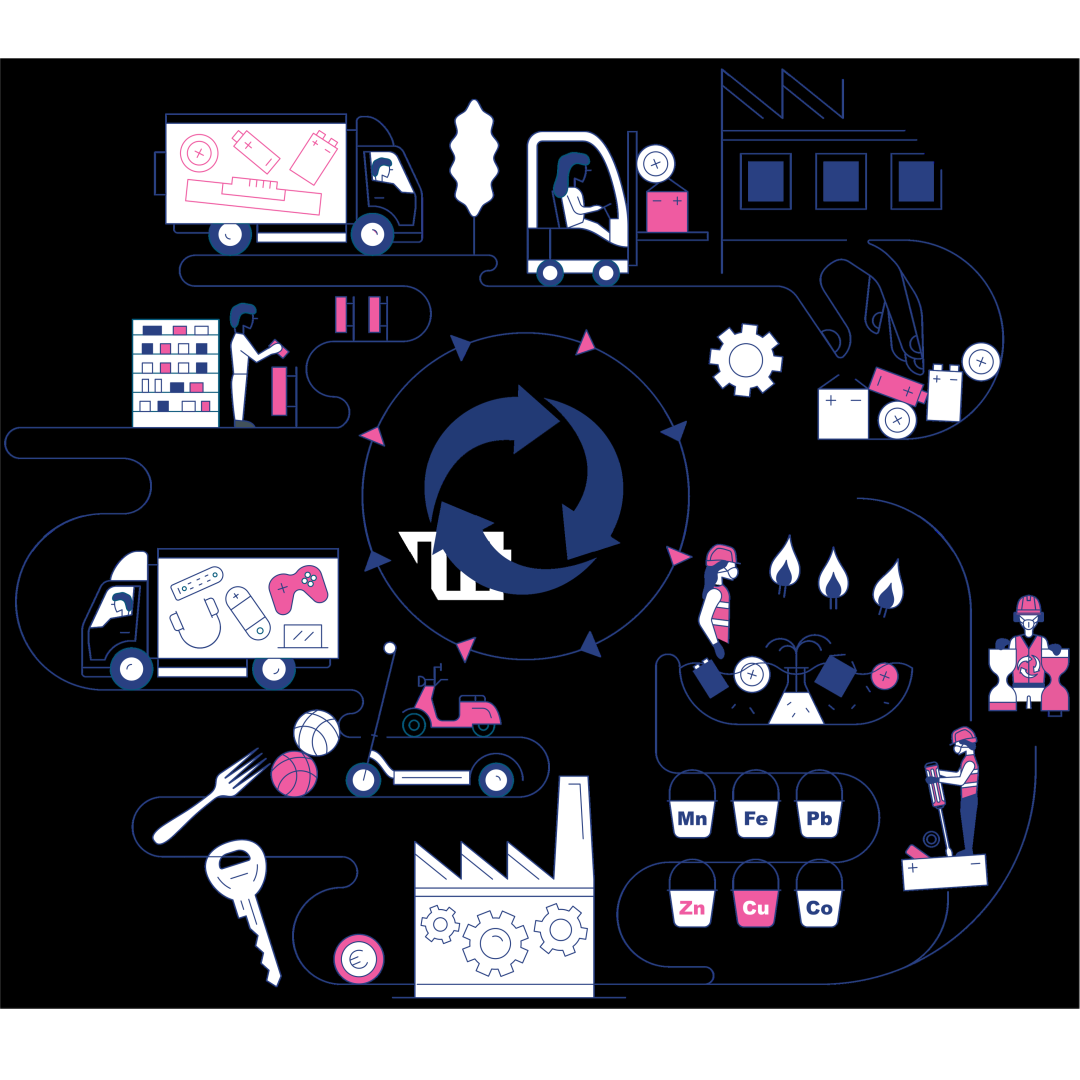
Once collected, used batteries undergo a rigorous process to ensure their recycling and the recovery of their components. They are first grouped, weighed and sorted according to their technology (alkaline, lithium, rechargeable, etc.). After this first stage, they are sent to specialized centers where they are dismantled and treated using appropriate processes. The aim of this process is to extract and recover the raw materials they contain (metals, plastics, chemical compounds) and give them a new lease of life. These materials are then reintegrated into the manufacture of new products
products, thus limiting the exploitation of natural resources and reducing the environmental footprint of these wastes.
How are batteries collected ?
The collection of used batteries is based on a network of drop-off points throughout France and its overseas territories. Stores, businesses, schools, local authorities, administrations, waste collection centers... 32,222 players have chosen the Batribox collection solution to take part in this eco-responsible initiative.
A dual collection system
- Micro-collection: for the general public via Batribox collection points, available in shops and public places.
- Professional collection: by companies specializing in waste management and dismantling of WEEE (Waste Electrical and Electronic Equipment).
A rigorously controlled process
- Storage of batteries in secure containers (bins, cartons or drums).
- Waste collection and deposit of new, empty containers by an approved carrier.
- Traceability of collection guaranteed by the obligation to draw up a waste tracking slip (BSDD).
Optimized logistics for reduced impact
The batches collected are then grouped together in specialized centers before being sent to sorting sites (for mixed batteries) and processing sites (for pre-sorted batches).
How are used batteries sorted ?
 Once collected, batteries go through a key stage: sorting. Each technology requires specific treatment, so it's essential to separate them precisely to optimize their recovery.
Rigorous sorting into 7 distinct streams
Batribox relies on 4 sorting centers in France that classify batteries according to their composition:
- Batteries
- Salt, alkaline and zinc-air
- Lithium
- Button cells
- Portable batteries
- Nickel-Cadmium (NiCd)
- Nickel-Metal Hydride (NiMh)
- Rechargeable lithium (Li-ion)
- Lead (Pb)
Objective: sorting to 99% purity
To guarantee efficient recycling, sorting must achieve a purity rate of over 99%. This means that for every 100 kg sorted, less than 1 kg of error is tolerated. 100% of the products collected by Batribox achieve this optimum purity, guaranteeing optimized processing and recovery.
How are batteries treated?
Once sorted, batteries are processed: their materials are extracted and recycled. On average, 60% of the raw materials in portable accumulators and 50% in batteries are recovered. Batribox relies on 12 specialized processing centers to optimize this recovery.
Processes adapted to each technology
Batteries are made up of many different materials. Several techniques are used to extract and reuse their components:
- Pyrometallurgy
A thermal process suitable for most batteries, it recovers metals such as zinc, nickel and iron. - Hydrometallurgy
Chemical extraction of metals by dissolution. This technique is used in particular to recover zinc and manganese from saline, alkaline, zinc-air and lithium batteries. - Distillation
- Fusion
What happens to the material
recovered after processing batteries ?
 After treatment, the extracted metals are recovered in the form of :
- Metals or oxides (nickel, cadmium and zinc).
- Ferromanganese (manganese).
- Scrap or incorporated into alloys (iron).
- Liquid purified metal (mercury).
Metals reused in many industries to make new objects
- Lead and cadmium: manufacture of new batteries.
- Manganese: production of wear-resistant parts (e.g. excavator buckets).
- Cobalt: design of turbine blades for jet engines.
- Nickel and stainless steel: processing into household items and building equipment.
- Zinc: manufacture of gutters and corrosion protection.
- Iron, copper, nickel: manufacture of bicycles and other metal equipment.
New objects, industrial applications: this recycling process saves natural resources
natural resources and limit the extraction of raw materials.
Find out all about the second life of lithium batteries → batteries
Why create a dedicated
battery recycling channel ?
 Batteries contain substances that can present a risk to the environment if disposed of in household waste. Specific sorting and treatment processes enable them to be recycled in complete safety.
The EPR (Extended Producer Responsibility) system for portable batteries and accumulators is based on a structured ecosystem that brings together a number of players: public authorities, producers and marketers, and collection and recycling professionals.
The aim ? Optimize waste management to reduce its environmental impact and promote an efficient circular economy.
This sector relies on approved eco-organizations such as Batribox, which coordinate collection, sorting and recycling operations. Producers of batteries and accumulators are required to join these organizations in order to guarantee the responsible management of end-of-life products.
All you need to know about EPR: Extended Producer Responsibility →
Battery recycling: what are the latest standards? →
How is battery recycling financed ?
Battery recycling is free of charge for users and collection points. It is financed by an eco-contribution, a fee paid by manufacturers, distributors and marketers.
Managed by approved eco-organizations such as Batribox, this contribution covers the costs of collection, sorting and recycling. Its amount is determined according to a scale validated by the public authorities, based on the weight and quantities placed on the market.
To encourage eco-design, Batribox grants an eco-bonus to companies
that commit to an eco-design approach for their products.
All you need to know about EPR: Extended Producer Responsibility →