
Portable batteries
Remote controls, toys, watches, smartphones... Batteries are everywhere. But once out of use, what happens to them? Thanks to an efficient collection network and optimized recycling, Batribox transforms this waste into new resources. Find out how it works and why it's so important to get involved.
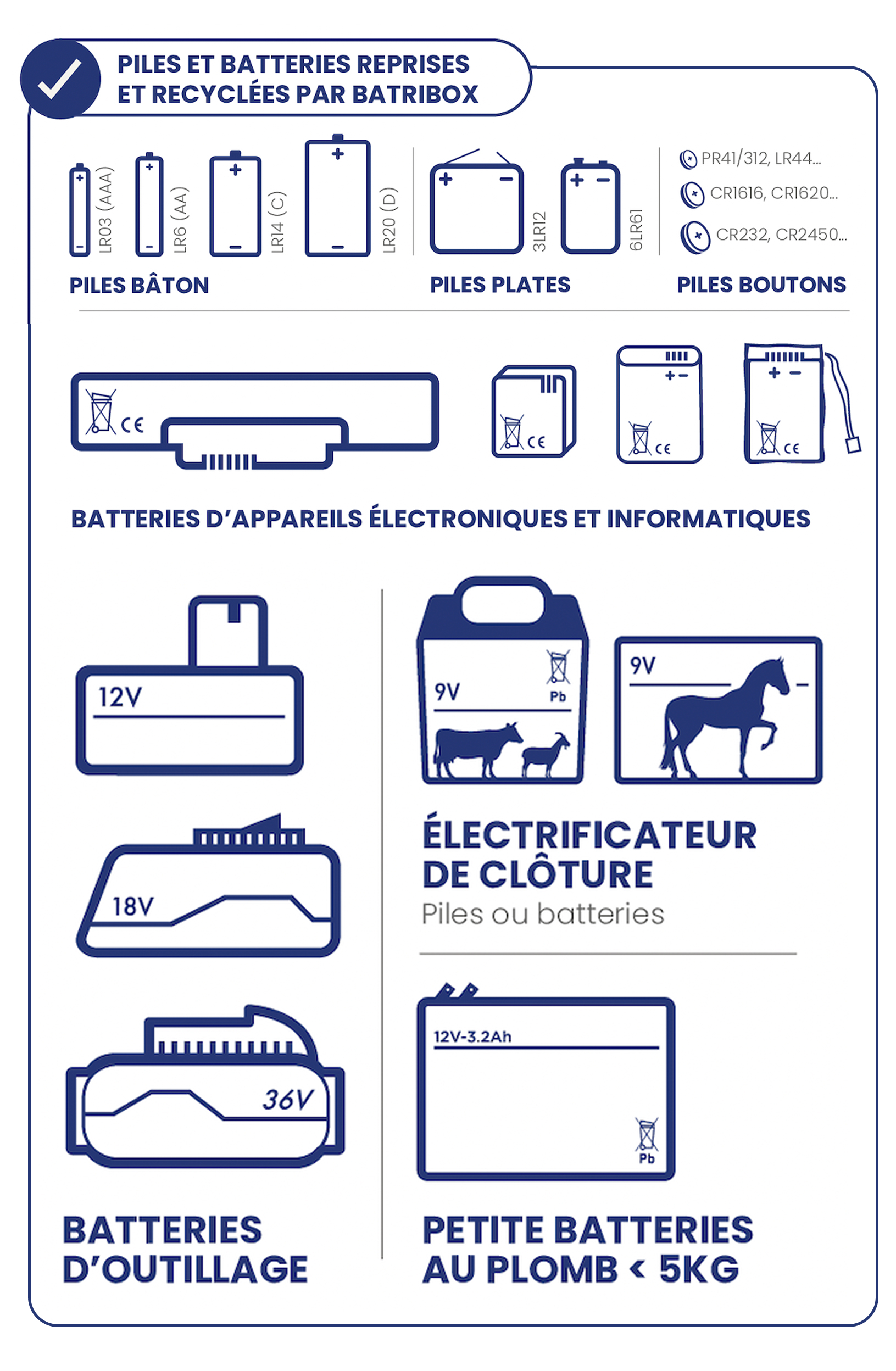
Which batteries are collected?
The EPR sector covers all portable batteries and accumulators, defined as sealed devices that can be carried by hand, whatever their weight, shape or volume. Only industrial and automotive batteries are excluded.
In concrete terms, the collection includes :
- Alkaline, saline, lithium, zinc-air and button batteries.
- Rechargeable Nickel-Cadmium (NiCd), Nickel-Metal Hydride (NiMh), Lithium, Sodium-ion and lead batteries.
"A portable battery or accumulator is any battery, button cell, battery assembly or accumulator that is sealed and can be carried by hand, and which is not otherwise an industrial battery or accumulator or an automotive battery or accumulator"
Article R543-125 of the French Environment Code.
From August 2025, the regulations will evolve towards a new classification of batteries, including batteries for electric vehicles and light means of transport:
- Portable batteries
- Industrial batteries
- Electric vehicle batteries
- Light transport batteries
- Starter, lighting and ignition (SLI) batteries.
Batribox supports this transition by guaranteeing efficient, compliant battery management.
Framing for better recycling
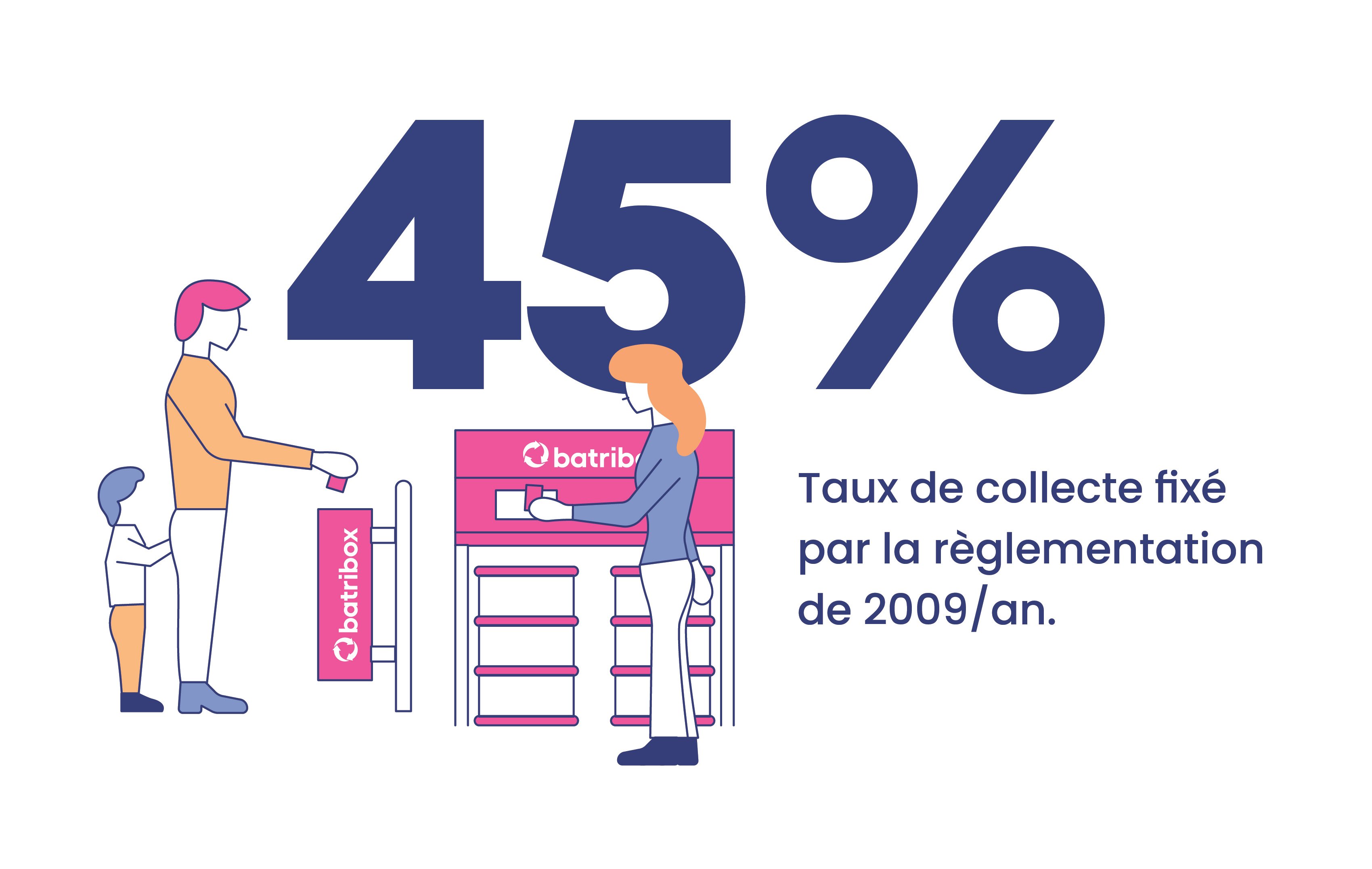
Since 1991, in response to the potential risks associated with batteries and accumulators, a dedicated collection and treatment system has been in place in Europe. In 2009, the regulations changed, distinguishing three categories of batteries:
- Portable
- Automotive
- Industrial
Of these, only portable batteries and accumulators (PAPs) are covered by the EPR system, which requires membership of a government-approved eco-organization.
Companies manufacturing or marketing this type of battery, or products containing them, are required to manage the end-of-life of these items, from awareness-raising to collection and recycling.
To comply with these legal obligations, they transfer this responsibility to an eco-organization.
Why recycle portable batteries?
-
Constantly rising consumption
36,587 tonnes of portable batteries and accumulators were placed on the market in France in 2023. -

A major environmental and health issue
The boom in wireless devices is leading to high consumption of batteries, which contain heavy metals that are dangerous for the environment and our health. -

Recycling, a key lever for preserving resources
Recycling limits pollution and recovers reusable materials such as lead, lithium and cobalt. -

A positive economic and territorial impact
Recycling reduces our dependence on imported resources and supports the local economy thanks to processing facilities in France. -
A simple gesture for a sustainable future
Sorting and returning your used batteries means protecting the planet and preserving resources for future generations.
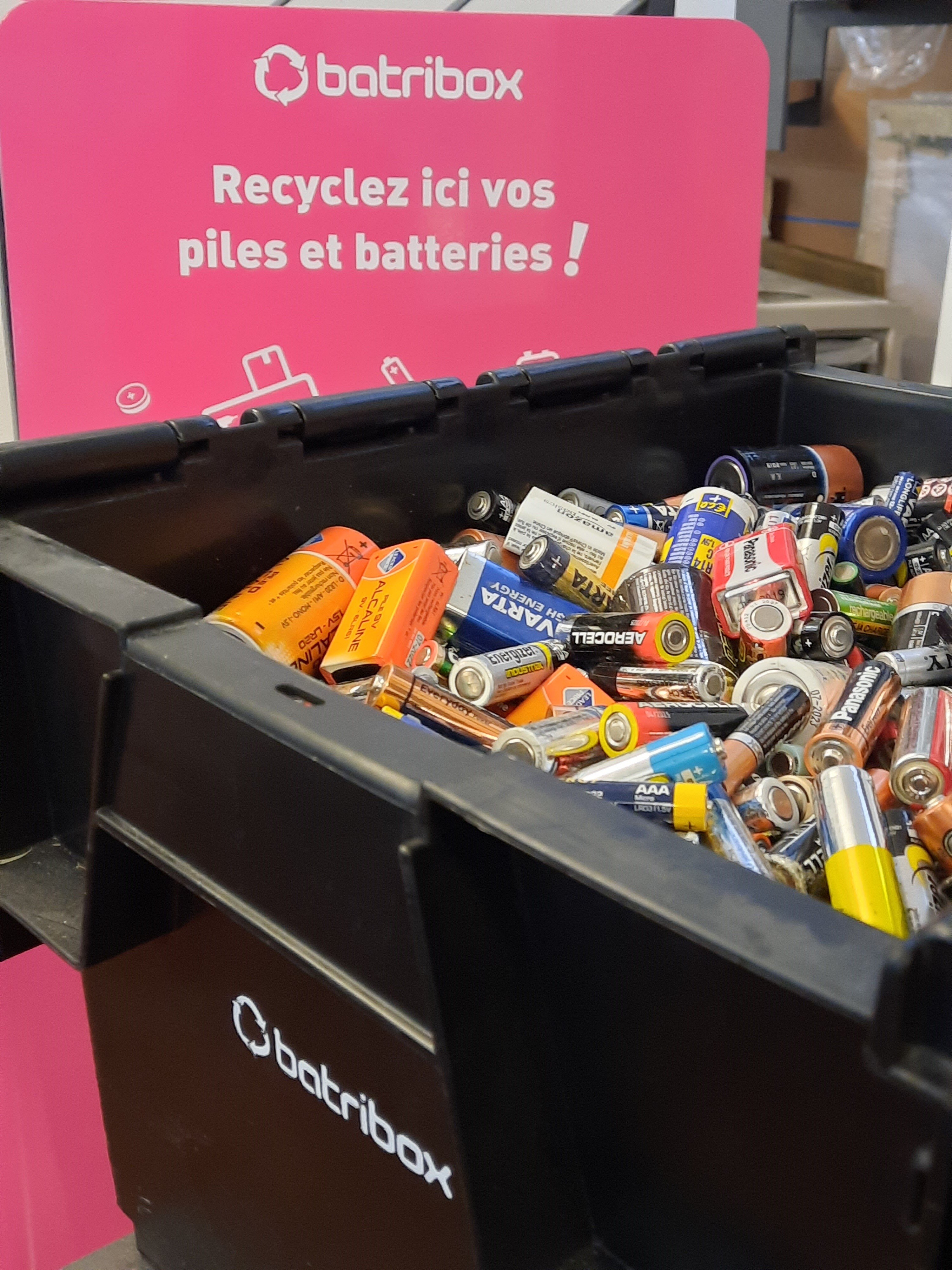
Batteries, portable accumulators - what are we talking about?
The term "battery" is often used to refer to all portable energy sources. But what is the difference with a "battery"? An "accumulator"?
A battery is an electrical energy generator powered by a chemical reaction. As a single-use battery, it cannot be recharged.
In contrast, an accumulator, also known as a rechargeable battery, stores and releases electrical energy through a reversible process that allows recharging. In everyday language, we use "rechargeable battery" or "accumulator" for an independent element.
A battery technically refers to an assembly of accumulators coupled together to obtain a higher voltage or greater energy reserve. A "battery" is generally integrated into a device (smartphone, laptop, power tool, etc.).