
Guaranteed safety from collection to recycling
For Batribox, safety is a priority. Rigorous measures govern the collection, storage and transportation of used batteries to prevent any danger and protect the environment. Find out how we ensure safe and responsible management of this sensitive waste.
.svg)
Preventing risks: 4 key rules
-

Wear gloves
-

Store drums under cover, on hard ground
-

Place a fire extinguisher nearby (lithium or powder fire)
-
Specific procedures for lithium-ion batteries
How to store used batteries?
To store your used batteries safely, place them in a box or jar, away from moisture and heat sources, and avoid contact with metal objects or new batteries.
Before recycling, check small appliances such as toys for spent batteries.
-
Low risk: Zinc air
Individually non-hazardous, these batteries require no special precautions. -
Moderate risk : Alkaline, NiMH, Silver oxide
Preferably insulate terminals to avoid short circuits. -
Marked risk: Sealed lead, NiCd
No immediate risk, but toxic substances (lead, cadmium) require careful handling.
-
High risk: Li-ion, primary lithium
Dangerous reactions if shocked, swollen or short-circuited. Return promptly to a collection point.
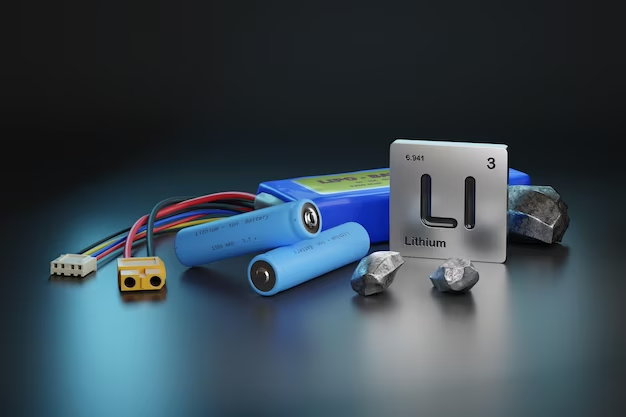
Safe packaging of lithium batteries
If your facility collects batteries and your stock contains more than 10% lithium, you must follow a strict packaging procedure.
- Secure each lithium cell and battery individually to avoid the risk of fire or short-circuiting. Poles should be insulated with tape.
- For storage, use vermiculite in containers to limit the spread of heat to the whole container.
- Soft batteries should be packed in zipped bags or small cartons to prevent damage.
- Damaged batteriesshould be insulated, taped and placed in plastic bags with vermiculite.