
Starting, lighting and ignition batteries
SLI batteries are essential for starting and powering many vehicles (cars, motorcycles, trucks...). In August 2025, they will be subject to Extended Producer Responsibility (EPR). A new challenge for the collection and recycling sector, and a key issue for the automotive and industrial sectors. Batribox sheds light on this transition!
What is an SLI battery?
SLI (Starting, Lighting, Ignition) batteries are mainly used for starting, lighting and ignition in thermal and hybrid vehicles.
Found in the majority of cars, motorcycles, trucks, industrial machinery and other vehicles (boats or certain agricultural machines), they are designed to deliver high instantaneous power and tolerate rapid charge/discharge cycles.
Reinforced connections. Improved on-board electronics. New generations of batteries are arriving to meet the performance and innovation requirements of modern vehicles.
Are SLI batteries recyclable?
Composed mainly of lead, liquid electrolyte and plastic, these batteries are recyclable. At present, SLI batteries are collected mainly through specialized channels, separate from those for batteries and small cells. These batteries, which are often large and heavy, are generally collected by :
- Garages and dealerships.
- Waste disposal centers.
Companies specializing in the processing of SLI batteries extract and recycle the materials they contain.
- Lead is reused in the manufacture of new batteries.
- Plastic is recycled to produce new plastic objects.
- The electrolyte, once processed, is used in a variety of industries.
A structured collection system is therefore essential to ensure responsible management of this waste.
Why an approval in 2025?
Driven by European directives, SLI batteries will come under the Extended Producer Responsibility (EPR) scheme in August 2025. This regulatory change requires manufacturers and distributors of these products to finance and organize their collection and recycling.
The aim is twofold:
- To improve waste management.
- To promote the recovery of materials, and thus the circular economy.
What changes can be expected under the new agreement?
The move to EPR marks a key stage in structuring the sector and guaranteeing treatment in line with environmental requirements. The new European regulations set ambitious targets, particularly in terms of :
- Design
By 2031, SLI batteries will have to incorporate a percentage of recycled metals: 16% cobalt, 85% lead, 6% lithium and 6% nickel.
- Information
By 2027, certain information will have to be marked on batteries: metals (including the quantity of recycled cobalt, lead, lithium and nickel incorporated into the battery), conformity, collection.
- Recycling
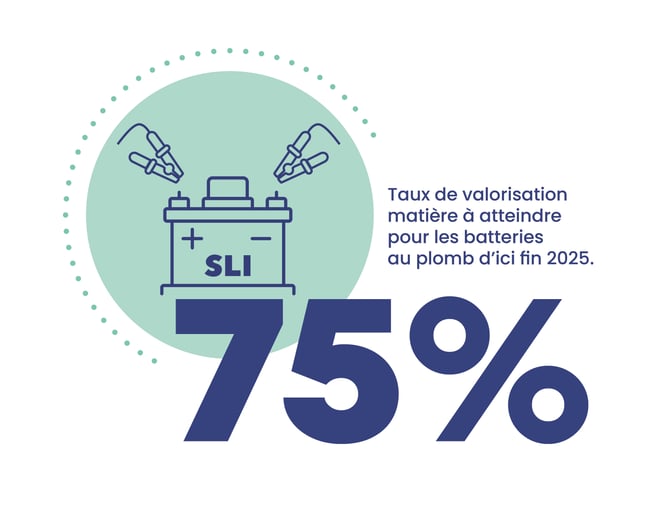
By the end of 2025, the material recovery target for lead battery recycling has been set at 75% (target 80% in 2030). Metal recovery rates are set at 90% for lead, copper, cobalt and nickel, and 50% for lithium (by the end of 2027).
These targets encourage the optimization of recycling processes and the reduction of the environmental impact of end-of-life batteries.
Find out more about the development of the low-consumption car market →
What role does Batribox play in this transition?
Are you a manufacturer, distributor or professional concerned by SLI batteries? Batribox can help you anticipate this regulatory change.
By the summer of 2025, we'll be able to provide you with suitable collection solutions, personalized support and all the information you need to ensure smooth compliance.
Our already well-established collection network will be strengthened to optimize the recovery of these batteries throughout the country. We are also working with specialized partners to guarantee efficient and responsible recycling.
Contact us today to find out more, and to work together on the future of SLI battery recycling.