
All about second life
With the rise of electric mobility and wireless devices, the number of batteries in circulation is exploding. But what happens to them once they've been used up? Rather than being recycled immediately, some batteries can be given a second life thanks to innovative solutions that prolong their use and reduce their environmental impact. What are the challenges and options for second life?
What is the circular economy?
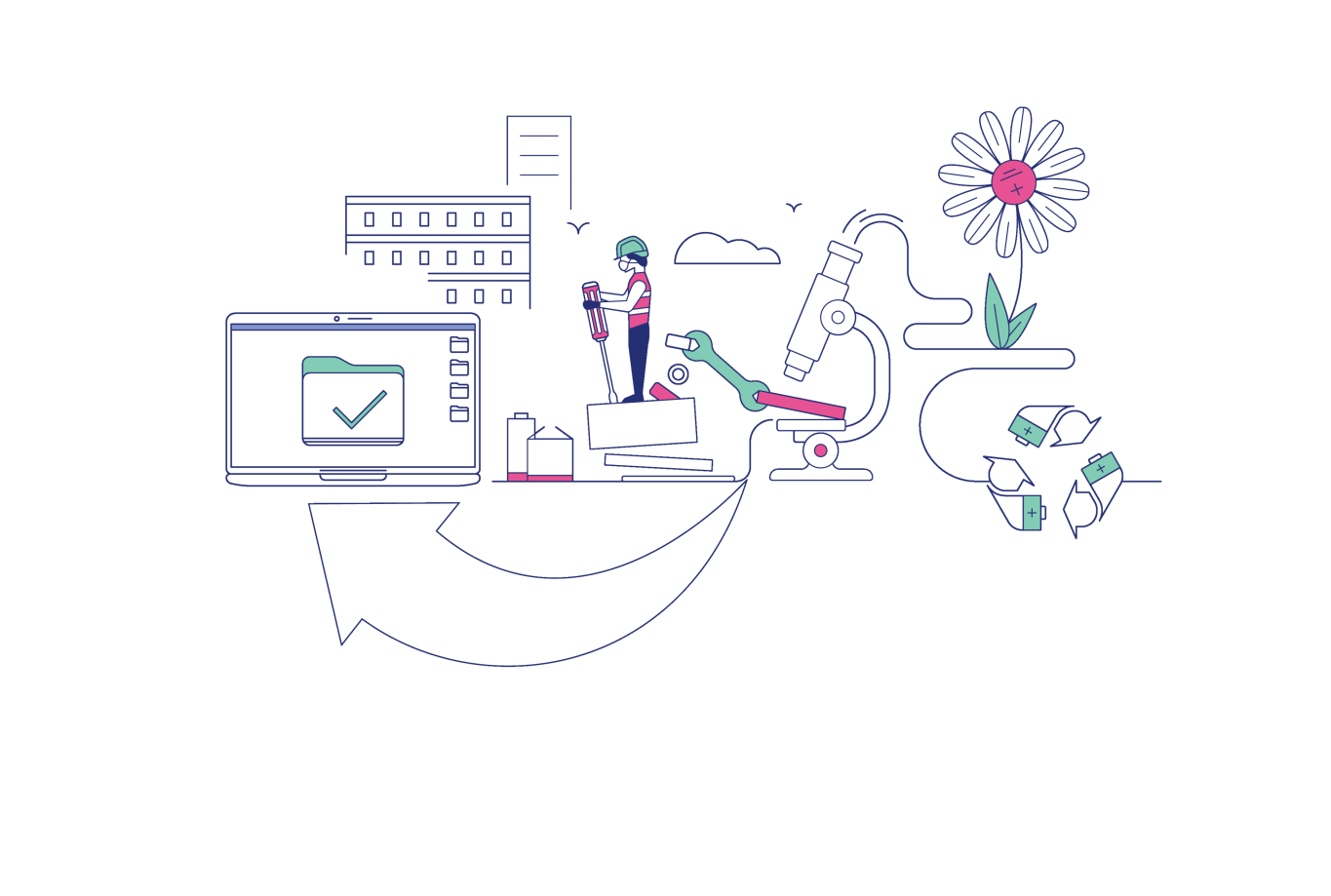
The circular economy aims to produce goods and services in a sustainable way, by limiting :
- Consumption and waste of resources.
- Waste production.
Unlike the linear economy, the circular economy is based on the reduction, reuse and recycling of existing materials and products. The aim is to move from a throwaway society to a circular economic model.
When applied to batteries, the circular economy minimizes the environmental impact of both logistics and recycling, by making batteries more durable and recycling them only when necessary.
Why give batteries a second life?
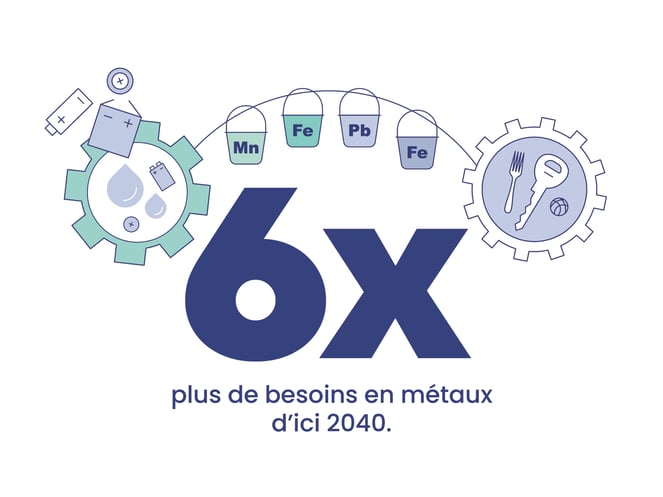
Battery management is a key issue in the energy transition, but also critical in terms of resource use. In view of public authorities' decarbonization objectives and the growing electrification of uses, it is essential to optimize their life cycle.
Batribox takes a 2-pronged approach:
- Delaying the recycling stage.
- Encourage more sustainable batteries through eco-design, extended life and re-use.
Eco-design: solutions for a sustainable future →
What are the advantages of second life?
Giving batteries a second life means meeting several major challenges:
- Optimizing resources
Reusing batteries that are still functional limits the extraction of rare metals. - Reducing waste
By prolonging their use, we prevent them from prematurely becoming waste. - Reduce environmental impact
- Support a sustainable economy
Second life encourages innovation and creates new industrial opportunities.
What are the second-life solutions for batteries?
To build a circular economy, a number of operational solutions are available to extend the life of batteries before they are recycled. Reuse, re-purposing, remanufacturing. Sustainable alternatives are developing.

- Reuse: extending the first life of batteries
Although they have reached the end of their life cycle, some batteries are still functional and can therefore be reused for the same purpose for which they were designed.
To optimize performance and extend their useful life, these batteries are then prepared for reuse through various processes: repair, reconditioning, remanufacturing and rebalancing. - Reuse: giving batteries a second life
Batteries that can no longer be used in their original application can be reconditioned for uses other than those for which they were originally intended. To give them a new lease of life, they go through a process of preparation for re-use: dismantling, analysis of components, diagnosis of state of health (SOH), sorting and remanufacturing. - Recycling: organizing the management of used batteries
When re-use or re-purposing solutions are no longer possible, batteries are dismantled, their components sorted and processed (crushing, pyrometallurgy, hydrometallurgy) to recover second-life raw materials (lithium, cobalt, nickel, etc.).
These materials are then reintegrated into the manufacture of new batteries or other industrial products, reducing the need to extract rare metals.